New Demo Conference May 13
- 29th Aug - 18th Sep 2025
- USA
- [email protected]
Introduction
Most of the earth’s population currently resides in urban areas. It is well-known that the planning and construction of our cities may significantly impact the surrounding environment. Since the Industrial Revolution, human emissions of greenhouse gases, including carbon dioxide, have increased. This increase is mostly attributed to the combustion of fossil fuels like coal, oil, and natural gas. These gases intensify the greenhouse effect, retain heat in the atmosphere of the planet, and are quite likely the primary driver of global warming since the middle of the 20th century. Numerous effects of the changing climate are already evident, such as the health risks associated with extreme weather events. These effects will only get worse as the climate continues to change. To limit the extent to which the climate changes, it is crucial that we drastically cut our greenhouse gas emissions and design urban areas by effectively implementing mitigation and adaptation strategies. Many nations worldwide are taking action to zero their emissions but this transition needs to be sped up. This is when Urban Physics comes into play. The concept of urban physics refers to the large community of scientists and researchers who use engineering and science to assist in designing indoor and outdoor urban environments that are comfortable, beneficial to human health, and low-energy consuming. Aerodynamics, statistics, meteorology, environmental chemistry, and pertinent fields of physics are all included in the well-established field of urban physics. As a result of all of this, Urban Physics is in an excellent position to play a role in making significant contributions to the issues and challenges facing cities today. Understanding the physical mechanisms behind urban phenomena allows us to create models that assist in forecasting future changes in energy consumption and urban environmental conditions under various scenarios including the climate, energy, society, and urban development.
Conference Scope
In its 4th edition, the international conference on "Health & Environmental Resilience and Livability in Cities (HERL)" is organized by IEREK in collaboration with the University of Perugia, Italy, and co-hosted by the University of Florence, Italy, and eCampus University, Italy, under the special theme "Urban Physics for Wellbeing and Resilience in Dynamic Climates (UPWARD)". This edition opens the conversation on how environmental integration can be achieved by using urban physics, and how they can work together to achieve the well-being of residents and increase urban space resilience and livability. Diverse perspectives and interpretations exist regarding what is necessary or acceptable in terms of environmental protection, and the study of environmental integration examines how governments can be instrumental in developing, promoting, and shaping a single and comprehensive environmental policy. Shaping this environmental policy using urban physics guarantees the well-being of the people living in urban spaces thus; granting much better lives free of pollution, extreme weather conditions, and environmental crises.
Statement of Purpose
The process of integrating environmental considerations into regular human thought, behavior, and practices is the most effective way to address the environmental difficulties that humanity faces, both individually and collectively. Globally, more individuals and institutions are considering environmental issues, yet attitudes, policies, and programs are not sufficiently integrated. The main objective of our conference is to take the fastest route that ensures the well-being of the residents of urban areas. The conference aims to use urban physics and all the relevant sciences related to the term including aerodynamics, statistics, meteorology, and environmental chemistry, to achieve environmental integration which ensures not only the resilience and the livability of the urban space but also the mental and physical health of its residents.
CAH Proceedings



Springer Springer 2
Conference Chair

Abdel-Aziz Mohamed
Anjali chauhan
job title
David Smith
Co-Chairs
Mohamed M. Chehimi
Anjali
Abdel-Aziz Mohamed
Anjali chauhan
job title


What is Lorem Ipsum?
Lorem Ipsum is simply dummy text of the printing and typesetting industry. Lorem Ipsum has been the industry's standard dummy text ever since the 1500s, when an unknown printer took a galley of type and scrambled it to make a type specimen book. It has survived not only five centuries, but also the leap into electronic typesetting, remaining essentially unchanged. It was popularised in the 1960s with the release of Letraset sheets containing Lorem Ipsum passages, and more recently with desktop publishing software like Aldus PageMaker including versions of Lorem Ipsum.

Featured Conferences
.jpg)
Environmental Design, Material Science, and Engineering Technologies - 3rd Edition
- 12th May - 14th May 2026
- Abu Dhabi, UAE
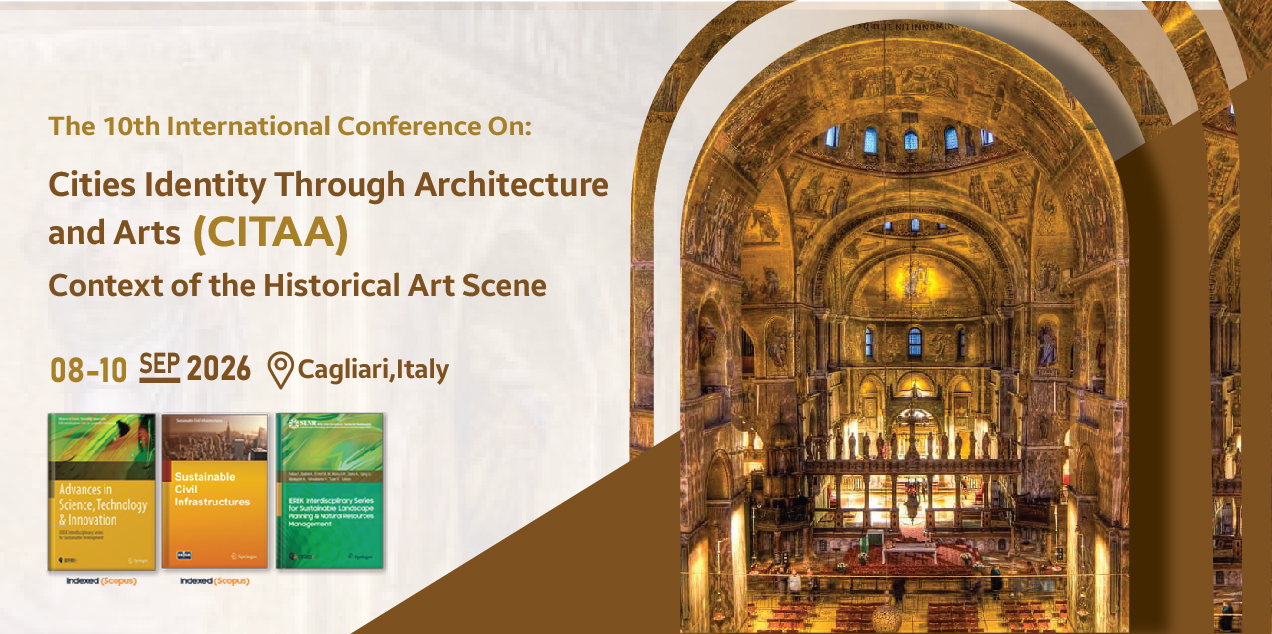
Cities' Identity Through Architecture and Arts 10th-Edition
- 08th Sep - 10th Sep 2026
- Caglari, Italy
New demo aug21
- 23rd Aug - 31st Aug 2025
- usa
Conference Ninja
- 17th Oct - 15th May 2025
- xvdfsdrg,erqe4
Conference 1
- 17th Nov - 15th May 2025
- xvdfsdrg,erqe4
Global Warming
- 09th Nov - 09th May 2025
- Kolkata,Behala

Testing Conference - Mostafa ElRouby
- 30th Oct - 03rd Nov 2026
- egy
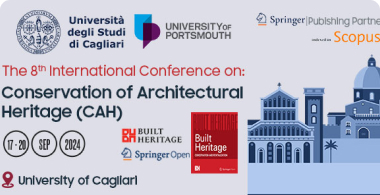
Green Urban Tourism update
- 10th Dec - 01st Jan 2025
- USA
The Future of Tech Innovations
- 01st Dec - 31st Aug 2025
- Silicon Valley, CA, USA
New Gen Conference
- 07th Feb - 28th Feb 2025
- Kolkata
.jpg)
Sustainable Water Management and Resource Adaptation - 3rd Edition Test
- 01st Jan - 18th Jun 2026
- Faculty of Civil and Industrial Engineering, Sapienza University of Rome - Via Eudossiana 18, 00184 Rome, Italy
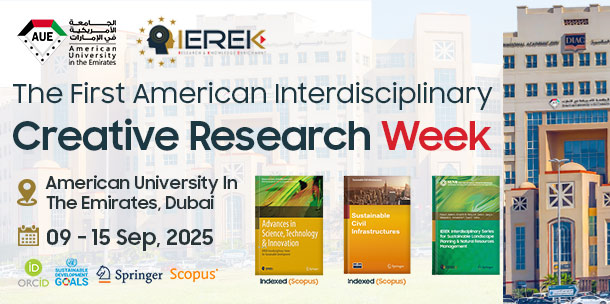
The AUE Interdisciplinary Research Week
- 09th Sep - 15th Sep 2025
- American University In The Emirates, Dubai
Lorem Ipsum is simply dummy text of the printing and typesetting
- 04th Jun - 30th Jun 2025
- Lorem Ipsum is simply dummy text of the printing and typesetting

New Edition - Landscapes Across the Mediterranean (CrossMED)
- 03rd Sep - 17th Sep 2025
- 49 Featherstone Street, LONDON, EC1Y 8SY, UNITED KINGDOM
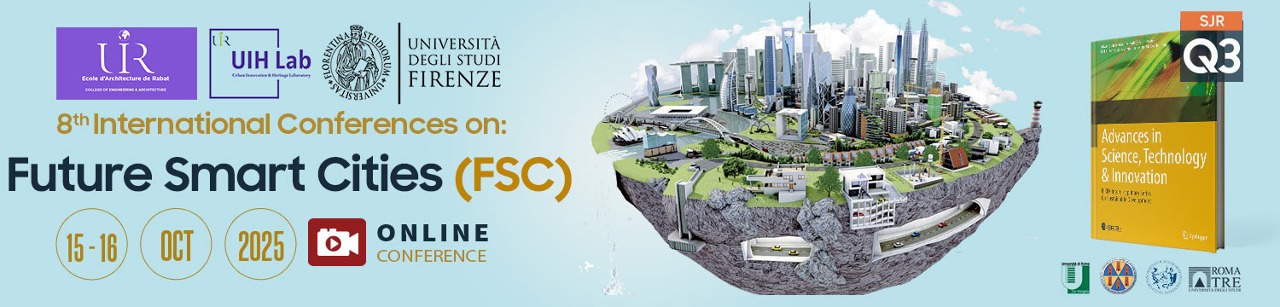
Future Smart Cities
- 25th Aug - 14th Oct 2025
- Online Conference in collaboration with International University of Rabat (UIR), Morocco

Test - Urban Physics for Wellbeing And Resilience in Dynamic climates (UPWARD) - 4th Edition
- 03rd Sep - 16th Oct 2025
- Perugia, Italy
Ask Us Anything!
If you have any question regarding our services, please fill out the form below and we will get back to you as soon as possible.
Partners